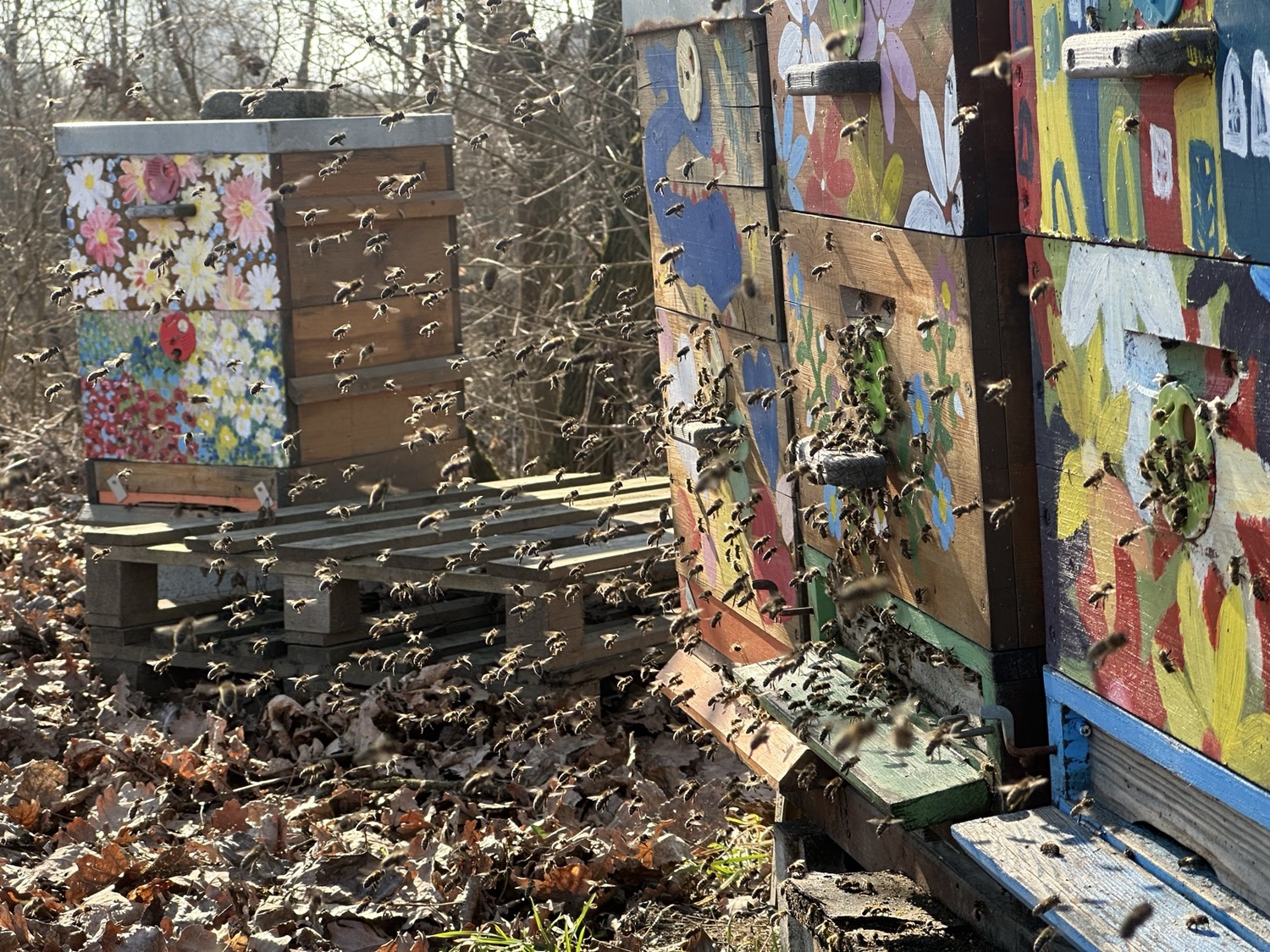
March. The grass still crunches underfoot in the morning, but by noon the first nervous bees start appearing at the entrance. Some bring yellow pollen pellets, others just buzz around and disappear inside. Most of us now ask the most common question: when and how to do the first inspection without harming the bees, but rather helping them? March inspections are always a bit tense. We want to find out if the queen is doing well, if the bees have enough stores, and if the winter caused any problems. But beware, the colony is now on the edge – if you disturb it unnecessarily long, you can harm it more than expected.
The good news is that the first inspection doesn’t have to be complicated. When you know what to look for and what to leave alone, you can discover important things in just a few minutes: how strong the colony is, how the stores look, whether there is brood, and if there are any warning signs. In the article, we’ll go through when to start, step-by-step guidance, common mistakes, and how to take notes that really help.
Why the first spring inspection is so important
The first spring inspection is not just the start of the season. It’s the moment when you decide whether to support the bees’ spring buildup or slow them down. As Thomas D. Seeley nicely describes, in spring bees have to keep the brood warm while saving energy. It’s not easy – weather keeps switching between winter and spring, and the bees are working hard to heat. Every minute the lid is open means loss of heat or stores for them.
Data from Beentry confirm this. Out of over 145 thousand inspections, more than 13 thousand records are from March alone. This shows that beekeepers take the first inspection seriously but keep it brief, focusing mainly on a few basics. The most common records include Capped, Bringing pollen, Queen seen, Calm, Fondant, Eggs laid, and Open. Essentially, we verify that the bees are alive, warm, have stores, and are heading in the right direction.
From the first inspection, you should come away with three clear answers: did the bees stay together? do they have enough food on hand? is it clear that the queen is present – that is, are there eggs or brood? You don’t always have to see the queen, but you should know if everything is running as it should. That’s what the first spring inspection is about.
When is the best time for the first inspection
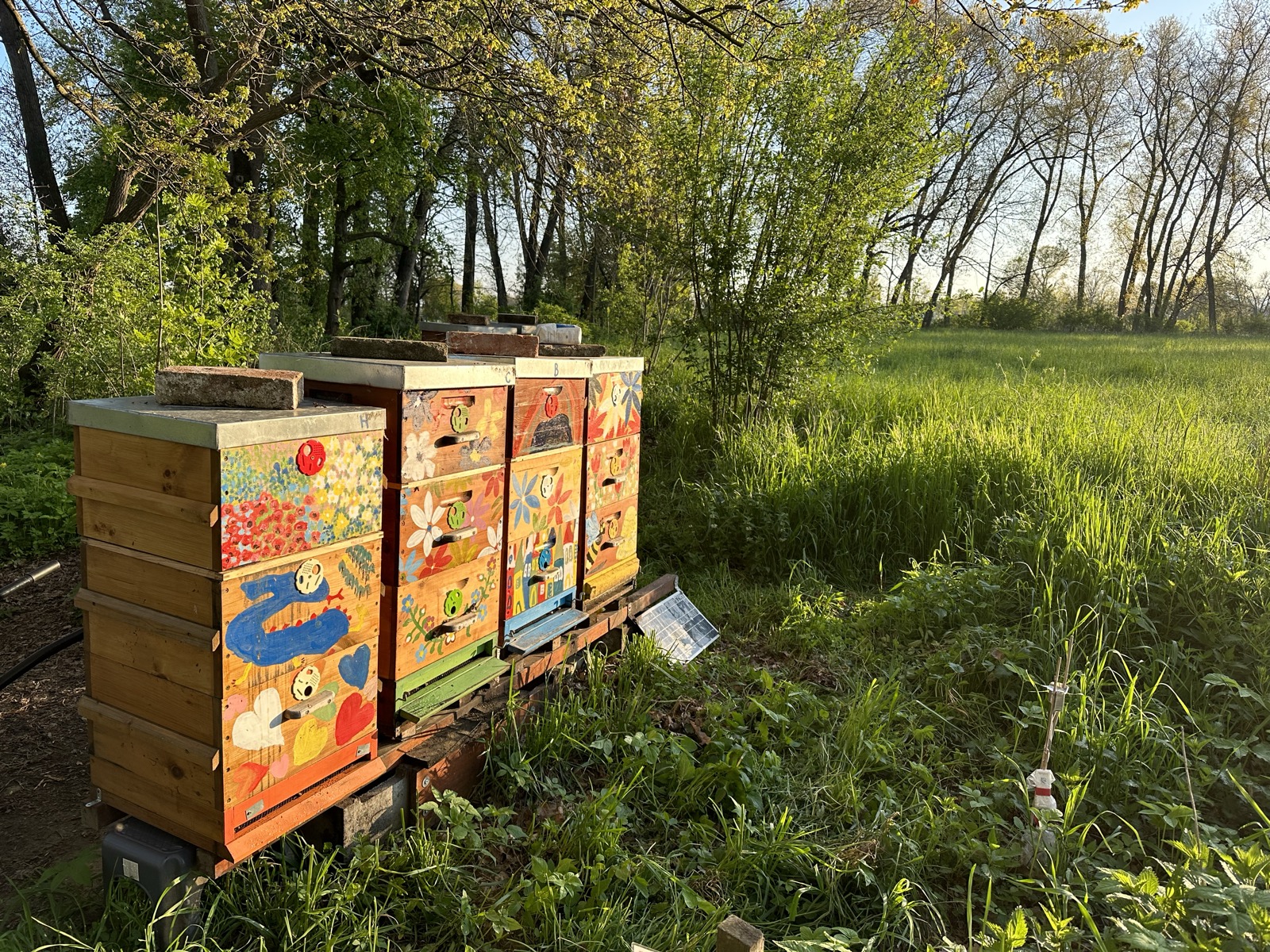
You won’t find an exact date. In lowlands, the ideal day can be in the first half of March, but in the mountains maybe a few weeks later. It largely depends on the weather, the strength of the colony, and of course what you see at the entrance. Most experienced beekeepers wait for a calm day without cold wind, with temperatures at least around 14 °C, preferably higher. Sun, shelter from the wind, and bees already flying are great signs. Weaker colonies should be checked even more carefully and quickly.
The best time is usually late morning to afternoon, when the air has warmed a bit. It’s not just about the thermometer – for example, sixteen degrees in the sun sheltered from the wind is different from the same temperature in the wind. If you have light hives and an open apiary, feel free to wait longer. Strong colonies already bringing pollen and sitting closely together handle the inspection quickly and without problems.
It’s good to always start with an outside look. Are the bees bringing pollen? That’s a great sign in March that brood rearing has started. No wonder Bringing pollen is among the most frequent March entries in Beentry. If you see dead bees on the bottom board, moisture, diarrhea, or restless flight, better open the hive later. You can recognize many things from outside – no need to disturb the bees unnecessarily.
A simple rule: first inspect from outside, then a quick check of stores, and only at the end a full first inspection. If the weather is not ideal, you can spread the work over two days. First just slightly lift the lid and check the feed. And when it’s warmer, go inside and look at brood and space. According to Seeley, maintaining a stable microclimate in the nest is crucial for bees, so you can judge the day by how the bees react and how the weather suits them.
What to prepare before lifting the lid
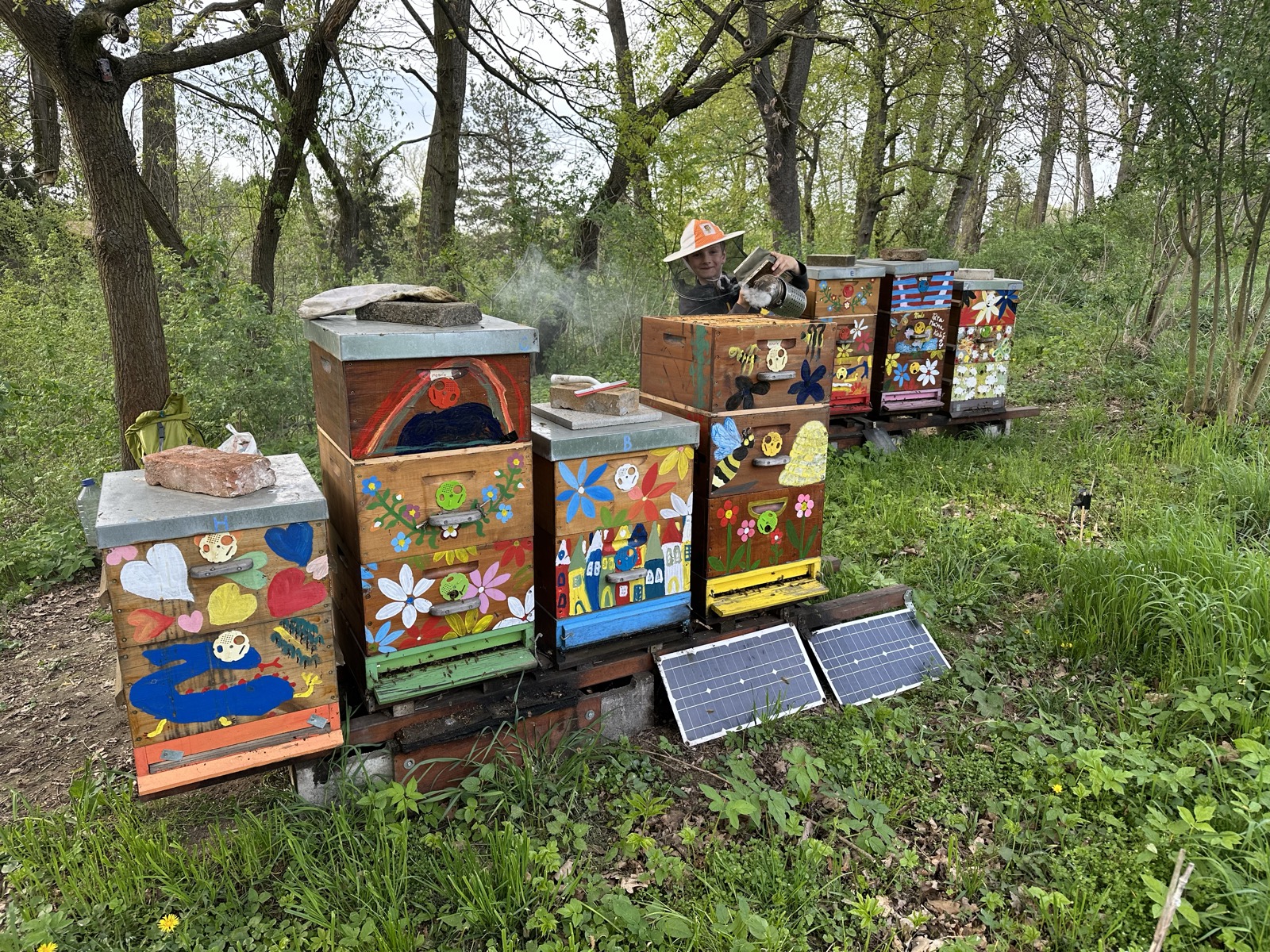
Nothing is worse than looking for your smoker, frame spacer, or notebook when you’re already at the hive. That’s why it’s better to be really well prepared for the first spring inspection. What mustn’t be missing? A lightly smoked smoker, frame spacer, clean base board or spare bottom, possibly fondant, a cozy jacket, and a bowl for dead bees or suspicious items. If you inspect several colonies, think about hygiene – diseases must not be spread between hives.
You’ll save nerves if you have a good note-taking system. In Beentry you can open each hive in the app, record a voice note during the inspection, and check the status of stores, brood, or health right away. You’ll appreciate this in March – your hands are often cold, you’re rushing, and don’t want to write long texts. Brief notes like “10.3. bottom board check”, “1st spring inspection”, “39x17”, “10 kg” or “15.4. added honey super + queen excluder” are fine. After a few weeks, you know exactly what happened and why.
Equally important is to distinguish observation from intervention. An observation can be “bringing pollen”, “calm”, “capped brood” or “eggs laid”. Intervention means adding fondant, reducing space, changing the bottom, or adding a honey super. I recommend keeping them separate so you don’t get confused and know what worked. If you also keep health records, write them precisely. Notes like “5.3. brood treatment” or “60% formic acid gel” make sense only if you add what treatment you applied and if it complies with veterinary regulations.
- Don’t forget to prepare feed. In March, hunger often troubles more than lack of space.
- Plan the inspection order. Start with strong and healthy colonies, suspicious ones last.
- Keep notes short. A clear sentence is better than a heap of unclear notes.
How to do the first spring inspection step by step
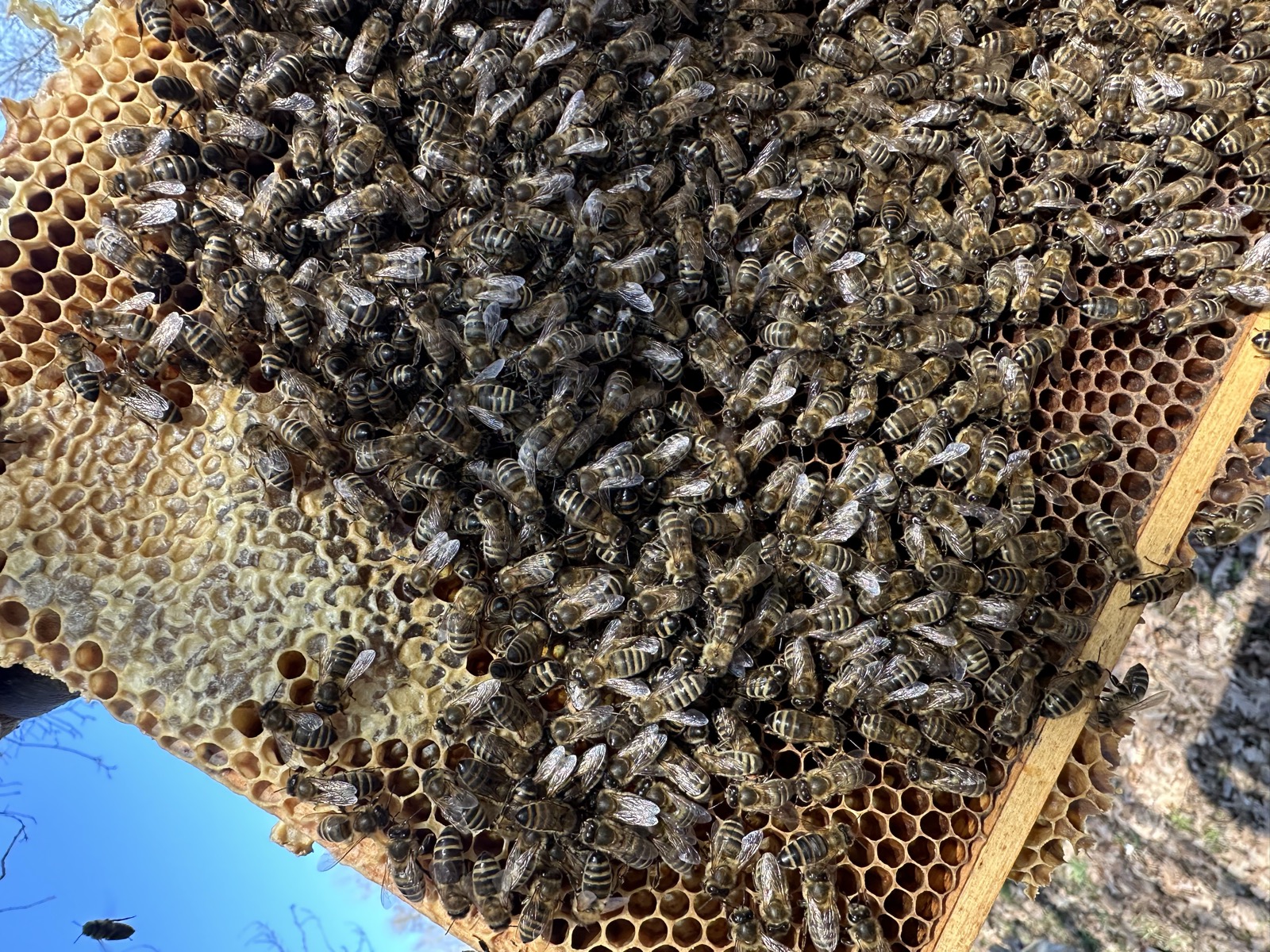
Want to keep the inspection quick but accurate? Stick to a simple procedure. According to Delaplane, van der Steen, and Guzman-Novoa, colony strength is assessed by three things: number of bees, amount of brood, and stores. In March, add the impression of bee calmness and hive cleanliness.
- Start at the entrance and bottom board. Look at how many dead bees and wax cappings there are, and check for moisture or slippery spots. You can learn a lot right here where the winter cluster is.
- Open the hive quickly with minimal smoke. In March, the rule “less is sometimes more” applies. Too much smoke unsettles and slows the bees down.
- Check the stores. Feel the outer frames or try to lift the super. If there’s little food, put fondant as close to the heart of the cluster as possible.
- Look for signs of the queen. The best proof isn’t always the queen herself but eggs or capped brood. It’s no coincidence that these records lead in Beentry in March.
- Evaluate colony strength. How many combs do the bees occupy? How tightly do they sit? Is the colony calm? The Calm label is really important – agitated bees often say more than brood presence.
- Carefully adjust space. Remove only what hinders – moldy comb, dirt, or things outside the cluster. Larger rearrangements leave for another time.
- Close the hive and record your notes immediately. What you found, what you did, and when you plan the next inspection. Beentry’s voice recording feature is great here.
What not to do? There’s no need to open the whole hive, chase the queen, or compare all colonies at once. One hive might have more brood, another is just starting. March is about monitoring development, not racing.
The first spring inspection should be simple. You see eggs, stores, and calm? Then the best service you can do is close the lid and let them work quietly. Not sure? Plan a smaller check in a week or ten days. A shorter visit is better than long openings you’ll regret.

What to watch for during the first spring inspection and when to keep your eyes wide open
Typically in March, you find a few frames full of bees, stores on hand, first larger brood, pollen pellets at the entrance, and calm bees. Problems arise when any of these are missing. Hungry bees are nervous, sit under the roof, or have food outside the cluster. A weak colony cannot heat well, and without a queen it tends to be restless and disorganized—but don’t judge immediately—better check again.
Brood is an important watch list item. Continuous and compact brood is a good sign. Sunken, perforated, or foul-smelling brood means it’s time to slow down, don’t rearrange things, and act cautiously. In Beentry, there have even been cases of American foulbrood discovered in March. Panic is not justified, but the first inspection is not just about food. Eva Genersch points out that early problem recognition and cleanliness are crucial to prevent disease spread. If you find something suspicious, avoid home remedies and follow proven methods and veterinary recommendations.
Brown spots on the hives or lid after the first flight are not immediately catastrophic – that happens after winter. But watch out for weak flight, moisture, mold, few bees, or long-term unrest. Not every hole in brood means disease. In March, weather, colony strength, and queen age play a role. It’s important to see context, not just one mistake.
Monitor varroa carefully in spring. Dietemann and colleagues advise monitoring rather than relying on eyeballing. Look at natural mite fall, record development, and don’t treat without clear reason. Some beekeepers write notes like “brood treatment” or “aerosol”, but it must always correspond with local treatments. Beentry is great here because you have it all together, see history, and know if it’s a one-time or recurring problem.
- Be alert if: there is no brood or eggs and the bees are nervous.
- Be alert if: bees sit on their last stores or have food outside the cluster.
- Be alert if: you find sunken cappings, odor, or strange things in larvae.
- Be alert if: there is too much moisture, mold, or too few bees inside.
Most common mistakes after the first spring inspection
First mistake: after the first check, we want to know everything. But March does not yet indicate a clear situation. It’s more a time to find out how the bees are doing. If you find eggs, stores, and reasonable strength, there’s no need to add feed, rearrange, or stimulate immediately. The second mistake is overfeeding thin syrup in the cold. Fondant is better – liquid stimulation only makes sense in suitable weather and colony strength.
Third mistake: combining or equalizing colonies too early. What looks weak now might soon improve. Fourth mistake is chaos in notes. Under hundreds of thousands of entries in Beentry, it’s clear that no single heroic inspection matters, but regularity and systematics do. When you repeatedly write the same things, you learn who struggles with hunger every spring, who starts late, and who needs more monitoring.
Fifth mistake: no plan after the first inspection. And that’s a pity, because the plan plays a main role. After inspection, decide when to come again, what you want to verify, and what to just watch. You can check strong colonies every seven days, while for weaker ones you can afford shorter intervals. Digital records like Beentry also help continue steps, track results, and have a good overview.
Beentry handles reminders, statistics, and even AI which extracts connections from your notes and suggests questions for the next inspection. It can’t replace an experienced beekeeper or veterinarian but monitors systems – stores, brood, strength, health, and what’s next. If you want, check out other articles, explore app features, and try beekeeping tools. For advanced users, there are also price lists.
Conclusion: let the first spring inspection flow
Simply put: the first inspection in March should show whether the bees are alive, healthy, have enough stores, and if there is brood or eggs. If yes, the best service you can do is to close the lid and let them work quietly. If not, act quickly but sensibly – add feed, reduce space, arrange the next check, and if disease is suspected, follow proven procedures.
In spring, it’s not about who opens the hive fastest, but who has the sense for the right moment. The best March beekeeper is the one who sees just enough, not too much. And if you want to have order in your notes after winter instead of a pile of nonsense, try Beentry. They have voice notes, hive management, health monitoring, and statistics that save you the most precious time – at the hive.
Sources and literature
- Keith S. Delaplane, Johan van der Steen, Ernesto Guzman-Novoa — Standard methods for estimating strength parameters of Apis mellifera colonies, Journal of Apicultural Research, 2013. link
- Vincent Dietemann, Jeff D. Ellis, Peter Neumann et al. — Standard methods for varroa research, Journal of Apicultural Research, 2013. link
- Eva Genersch — American Foulbrood in honeybees and its causative agent, Paenibacillus larvae, Journal of Invertebrate Pathology, 2010. link
- Thomas D. Seeley — The Lives of Bees: The Untold Story of the Honey Bee in the Wild, Princeton University Press, 2019. link

Beekeeper and co-founder of Beentry. He has been beekeeping since 2018, combining modern technology with practical beekeeping.