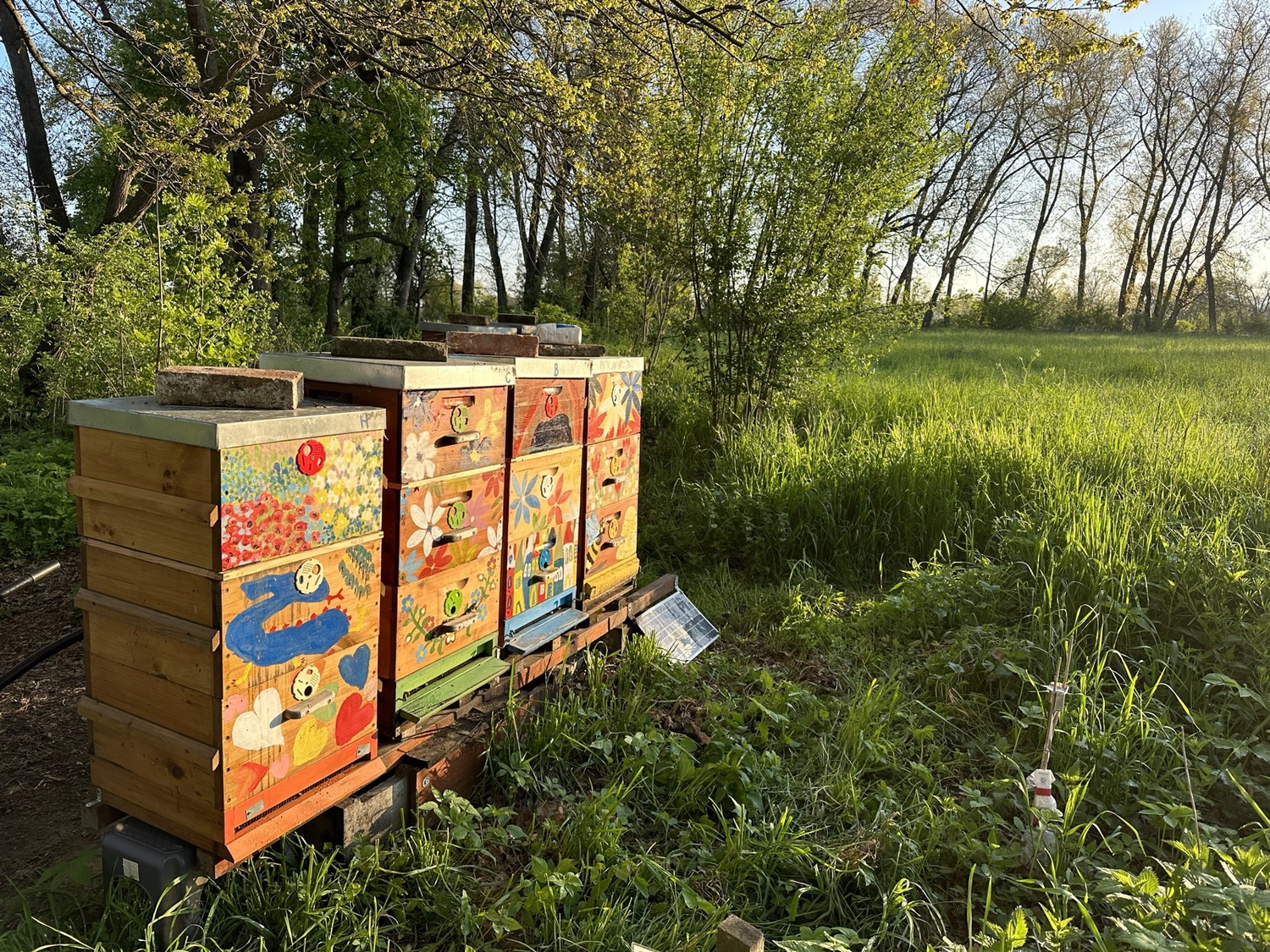
It is an April afternoon. The rapeseed shines across the landscape, fruit trees still hold blossoms, and there is steady traffic at the hive entrance. You open the hive and see exactly what you want: consistent brood, bees bringing in pollen, young builders, and a colony that after winter has finally thrown itself into growth. And that’s exactly when the question arises that almost every careful beekeeper sooner or later asks: when to insert the drone comb frame against Varroa? It’s not a minor detail. In April, you often decide whether you slow down the mites in time or just create the feeling that you have "done something," while the problem quietly multiplies inside the brood cells.
The drone comb frame is one of the simplest biotechnical measures we have at hand. You don’t need expensive equipment or complicated interventions. But you do need the right timing, good placement, and discipline when cutting it out afterwards. If you insert the frame too early, bees won’t occupy it or you will cool the brood nest. If too late, Varroa destructor will meanwhile use the drone brood elsewhere and you’re just catching up.
The good news is that the right time can be recognized directly in the hive. And if you keep records, for example in Beentry, every subsequent spring becomes clearer. Let’s show you how to decide in April where to place the drone comb frame, when to cut it out, and why this small thing is actually a big part of smart defense against Varroa.
Why the drone comb frame against Varroa works better than it seems
The principle is simple but biologically very clever. The Varroa destructor mite searches for brood cells just before they are capped and strongly prefers drone brood for reproduction. According to the review by Rosenkranz, Aumeier, and Ziegelmann, this is mainly due to the longer development time of drones and more suitable conditions in the cell. Practically speaking: when you offer the colony a drone comb frame, they very often build drone comb on it, into which the mites retreat more heavily than into worker brood.
This turns the drone comb frame into a deliberately created trap. Once the drone comb is capped, you remove it in time along with a large portion of the mites and their offspring. Nicholas W. Calderone showed in experiments published in the Journal of Economic Entomology that systematic removal of drone brood can reduce Varroa pressure. So it’s not folklore or blind tradition. It’s a method with biological logic and backed by research.
And it’s not just "a few extra parasites." The mite weakens the brood, worsens the condition of young bees, and very dangerously contributes to virus transmission. Samuel Ramsey et al. additionally demonstrated that the impact of infestation is physiologically more serious than previously thought. Therefore, it makes sense to put pressure on the mite population already in spring, when the colony is developing and every unsuccessful reproductive cycle of the mite is a valuable gain for the beekeeper.
At the same time, an important fact applies: the drone comb frame is not a panacea. The Honey Bee Health Coalition ranks it among biotechnical measures within integrated Varroa management, that is, as part of a broader system. In other words, it is an excellent helper, but not a substitute for infestation monitoring, considering colony strength, and other interventions according to the situation. This is exactly where most mistakes happen: some underestimate it as old school, others attribute miraculous power to it. The truth is in the middle. It works well when it is properly timed and used repeatedly.
When to insert the drone comb frame against Varroa in April
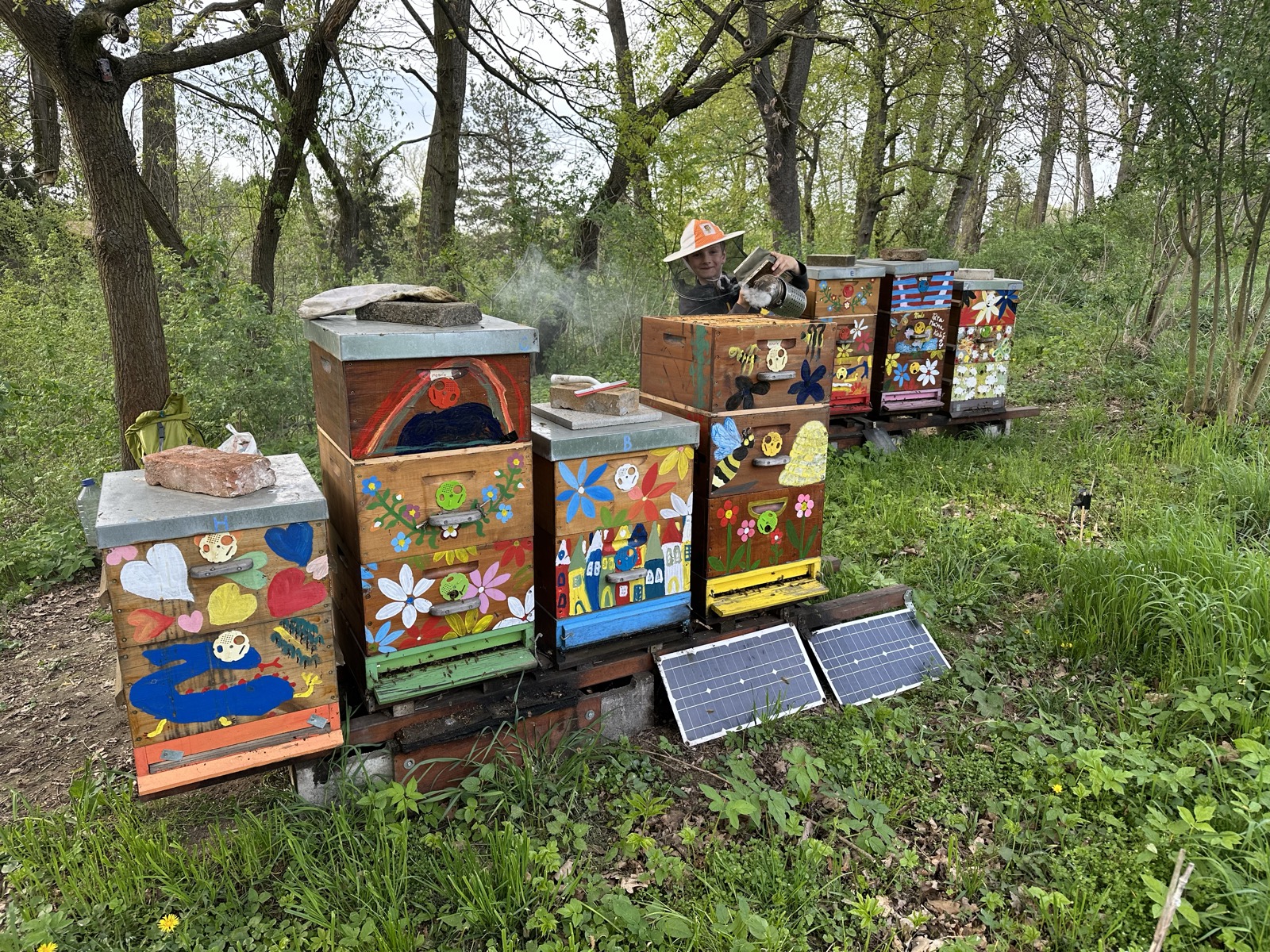
When to insert the drone comb frame against Varroa? In April, when the colony clearly expands, occupies the brood nest, heats up more brood, and has the urge to build. Not according to a single calendar date, but according to a combination of several clear signals. In lowlands, it can be early; in higher elevations, even a week or two later. The condition of the colony decides, not what fits your diary.
Five signs that it is the right moment
- The colony is strong and tightly covers most of the frames in the brood nest.
- You have both open and capped brood on several frames, indicating clear continuous development.
- Bees build light wax or willingly accept foundation sheets.
- The weather is more stable and there is no threat of a prolonged return of winter.
- First drones or drone brood appear, which is often a very reliable guide.
April is precisely the month when these signs start to come together in practice. Extensive beekeeping records show 14,151 inspections in April out of a total of 145,854. Among the most common April activities are Adding supers, Inserting foundation sheets, records of Open and Capped brood, but also Queen seen, Strong, and Calm. This is not coincidence. It is exactly the period when the bees are already fully active and the drone comb frame begins to make sense.
In practice, you can imagine it like this: if you are expanding space, adding foundation sheets and bees are really taking them, it is usually a better signal than any fixed date. On the other hand, do not force a weak post-winter colony to take a drone comb frame. It needs strength, warmth, and stable brood first. The drone comb frame is not a tool to “kickstart” the colony. It is a tool to utilize development already underway.
Also, keep in mind that April can be deceptive. Two warm days do not guarantee spring. If followed by a cold week, bees will stop building and the frame will remain half empty. Therefore, watch not only the outside temperature but also bee behavior inside the hive. When they whiten the wax and occupy new space, it’s time. When they just hold brood and stores, wait a bit longer.
A simple rule says: it’s better to insert a few days earlier at the moment of real building mood than two weeks later when drone brood is already capped elsewhere. This is the most common delay in April.

Where to place the drone comb frame, how many to use, and how to manage it
The right timing is only half the success. The other half is placement. If you want the drone comb frame to truly serve against Varroa, it must be in the brood nest, where the queen can lay in it. It does not belong above the queen excluder in the honey super. Of course, it sounds obvious, but especially in April, when you are adding space and have a head full of other tasks, such “obvious things” are most often forgotten.
For common frame setups 39x24, 39x17, Langstroth, and Dadant, a similar principle works well: place the drone comb frame at the edge of the brood nest, not in the absolute center of the cooler spring brood. In a strong colony, it can be right next to the last brood frame. There bees quickly build it, the queen usually lays in it, and you have it handy for inspection. If placed too far towards the stores, it may remain empty for a long time. If placed too aggressively in the middle of a weaker brood cluster, you risk cooling.
What the drone comb frame should look like
The simplest is a regular frame with a narrow strip of foundation at the top, or without foundation depending on your system. Bees build the rest themselves, and this often creates continuous drone comb, which you want to utilize. A full foundation sheet with normal worker cells reduces the effectiveness of the method because you do not offer the colony a natural place for drone comb building, just another standard frame.
How many drone comb frames to use? For most hobby beekeepers, it’s best to start with one per colony in spring. For exceptionally strong colonies, you can work with two, but only if you keep up with regular inspections and timely removal. Two neglected frames do more harm than one well-managed.
A good routine looks simple:
- Insert the drone comb frame at the edge of the brood nest.
- After 7 to 9 days, check if it is built and laid in.
- After the drone comb is capped, plan removal before hatching.
- Return the empty frame and repeat the cycle if the colony strength allows.
This method works best for colonies that are really growing. And April is the month when you simultaneously deal with space, swarming mood, and the first significant nectar flow. It’s no coincidence that in April there are also 30 honey harvests recorded, averaging 38.8 kg per extraction and a total of 1,164.8 kg of honey. In areas with early rapeseed or very favorable spring weather, work at the apiary speeds up surprisingly early — and the drone comb frame needs to be ready before the supers take over.
So it is not about "some extra empty frame." It is deliberately offered space that bees use according to their biology and you according to your discipline.
When and how to cut out the drone comb without unnecessary mistakes
Inserting the frame alone does not solve the mite problem. The critical factor is the moment of removal. If you cut out the drone comb too early, some cells will not yet be capped and you remove fewer mites than you could. If too late, the first drones start hatching and you release a new generation of mites. The “trap” suddenly becomes a hatchery.
In practice, it is proven to inspect the drone comb frame about a week after insertion. Once most of the drone comb is capped, the right window occurs. There is no need to wait for a perfectly uniform frame; it is more important not to miss the first hatch. Calderone and practical integrated Varroa management methodologies agree on one thing: regularity is more important than perfection. One frame cut at the right time is better than three late checks.
How to do it practically and cleanly
- Remove the frame calmly and without shaking, ideally during a regular inspection.
- Cut out the drone comb with a sharp knife or fork into a prepared container.
- Do not leave the material lying near the apiary. Either dispose of it immediately or freeze it and subsequently use the wax according to your practice.
- Return the frame if the period is still suitable and bees continue building.
What if the bees do not lay in the frame? If after a week it remains only partly built, check the colony strength, benefit, and placement. In a strong colony, moving it one position closer to the brood usually helps. However, if bees repeatedly cover it with nectar or pollen, the problem is not with the frame but with timing or space in the hive.
A frequent question is: should I cut out the entire frame or only a part? If the bees have built continuous drone comb and it is laid in, cutting out the entire built part is the most straightforward. Partial, fragmented removals worsen clarity during the next inspection. Beginners are recommended to stick to a simple and repeatable procedure rather than inventing complexities.
One more practical note: watch the drone comb frame mainly in the strongest colonies. They are a joy to see in spring — but also grow fastest, build most, and quickly switch to swarming mood. If you don’t understand their rhythm, you can easily miss not only drone comb removal but other important interventions.
What data from practice show and how to monitor timing with Beentry
At the apiary, it is easy to be deceived by impressions. One colony is "beautifully strong," another "can wait a bit longer," and a third "looked similar last time." But Varroa punishes impressions and rewards discipline. Beentry currently holds records of 145,854 inspections, with April accounting for 14,151 of them. This is a huge set of spring experiences showing a simple fact: April is the month of working with space, brood, and development pace.
This is confirmed in practice by the most frequent April items: Adding supers, Inserting foundation sheets, Queen seen, Open, Capped, Strong, Calm. This is exactly the moment it makes sense to add information on the drone comb frame to each colony: inserted, built, laid, capped, removed. Not for bureaucracy but because in a year you will see your own pattern. You may find that at your site near the forest you apply it a week later than in a sunny garden. Or that colonies on 39x24 frames react differently than those on 39x17. Such details the mind remembers surprisingly briefly.
According to standard methods for Varroa research by Dietemann et al., monitoring must have a repeatable procedure, otherwise reliable conclusions cannot be drawn. This also applies in everyday practice. If once you write “strong” and the next time just “something was flying,” almost no conclusions can be drawn. Useful data arise from a simple routine: same terms, same intervals, same evaluation. And this is exactly where the app makes the most sense.
What to record for the drone comb frame
- the date of frame insertion,
- colony strength and number of occupied spaces or frames,
- presence of open and capped brood,
- whether the queen is laying and was seen,
- the date of first drone comb laid,
- date and condition at removal,
- subsequent infestation monitoring.
The app is pleasantly practical in this. At the hive, you can dictate a voice note, add an activity to the colony, and later compare statistics on strength, brood, yields, and health development. Health monitoring, nectar flow tracking, and alerts for health risks are also handy, because the drone comb frame only makes sense as part of broader Varroa monitoring, not as an alibi that “I’ve already done something.” And if you are unsure, the AI advisor can help interpret records and show connections that easily get lost in everyday operation.
This nicely shows the diversity of beekeeping practice. In one database, you see brief notes like “March 10 floor check,” “one spring inspection,” or “April 15 added honey super + excluder,” frame sizes 39x17 and 39x24, feeding notes like “1:1 feeding 5 kg sugar to hive,” and treatment notes such as “brood paint,” “60% formic acid gel,” or “aerosol.” It begins to make sense when you connect these pieces into a single story of the colony. And the drone comb frame is one of the best spring points where that story turns.
If you want to go deeper, check out other articles, browse app features, and use beekeeping tools for your records. In a season alternating between brood, supers, swarming mood, and health decisions almost week by week, having an overview is more valuable than extra memory in your head.
A well-timed drone comb frame is a small intervention with a big effect
If you take only one thing away from this article, let it be this: when to insert the drone comb frame against Varroa is determined not by the calendar but by colony condition. In April, look for strength, building urge, continuous brood, and first drone comb. The frame belongs in the brood nest’s edge, must be regularly checked and cut out before drone hatching. Done in time, it is an inexpensive, gentle, and meaningful biotechnical measure. Done late, it is a missed opportunity.
At the same time, keep in mind the conclusion agreed upon by research and practice: the drone comb frame is part of a system, not a standalone solution. Monitor infestation, work with colony strength, and decide based on data, not impressions. If you want inspections, health monitoring, voice notes, statistics, and nectar flow tracking all in one place, try Beentry on the web, in the App Store, or Google Play. The pricing overview shows the options, and the rest will be worked out through your own hive records.
Sources and literature
- Rosenkranz, Alexander; Aumeier, Pia; Ziegelmann, Bettina — Biology and control of Varroa destructor, Journal of Invertebrate Pathology, 2010. link
- Calderone, Nicholas W. — Evaluation of Drone Brood Removal for Management of Varroa destructor (Acari: Varroidae) in Colonies of Apis mellifera (Hymenoptera: Apidae) in the Northeastern United States, Journal of Economic Entomology, 2005. link
- Dietemann, Vincent; Nazzi, Francesco; Martin, Stephen J.; Anderson, Denis; Locke, Barbara; Delaplane, Keith S.; Wauquiez, Quentin; Tannahill, Claire; Frey, Eva; Ziegelmann, Bettina; Rosenkranz, Peter; Ellis, James D. — Standard methods for varroa research, Journal of Apicultural Research, 2013. link
- Ramsey, Samuel D.; Ochoa, Ronald; Bauchan, Gary; Gulbronson, Chris; Mowery, Joseph D.; Cohen, Allan; Lim, Dae Yun; Joklik, Jiří; Cicero, Jessica M.; Ellis, James D.; Hawthorne, David; vanEngelsdorp, Dennis — Varroa destructor feeds primarily on honey bee fat body tissue and not hemolymph, Proceedings of the National Academy of Sciences, 2019. link
- Honey Bee Health Coalition — Tools for Varroa Management: A Guide to Effective Varroa Sampling & Control, Honey Bee Health Coalition, 2023. link

Beekeeper from southern Moravia with twenty years of experience. He writes about practical methods and seasonal colony care for Beentry.