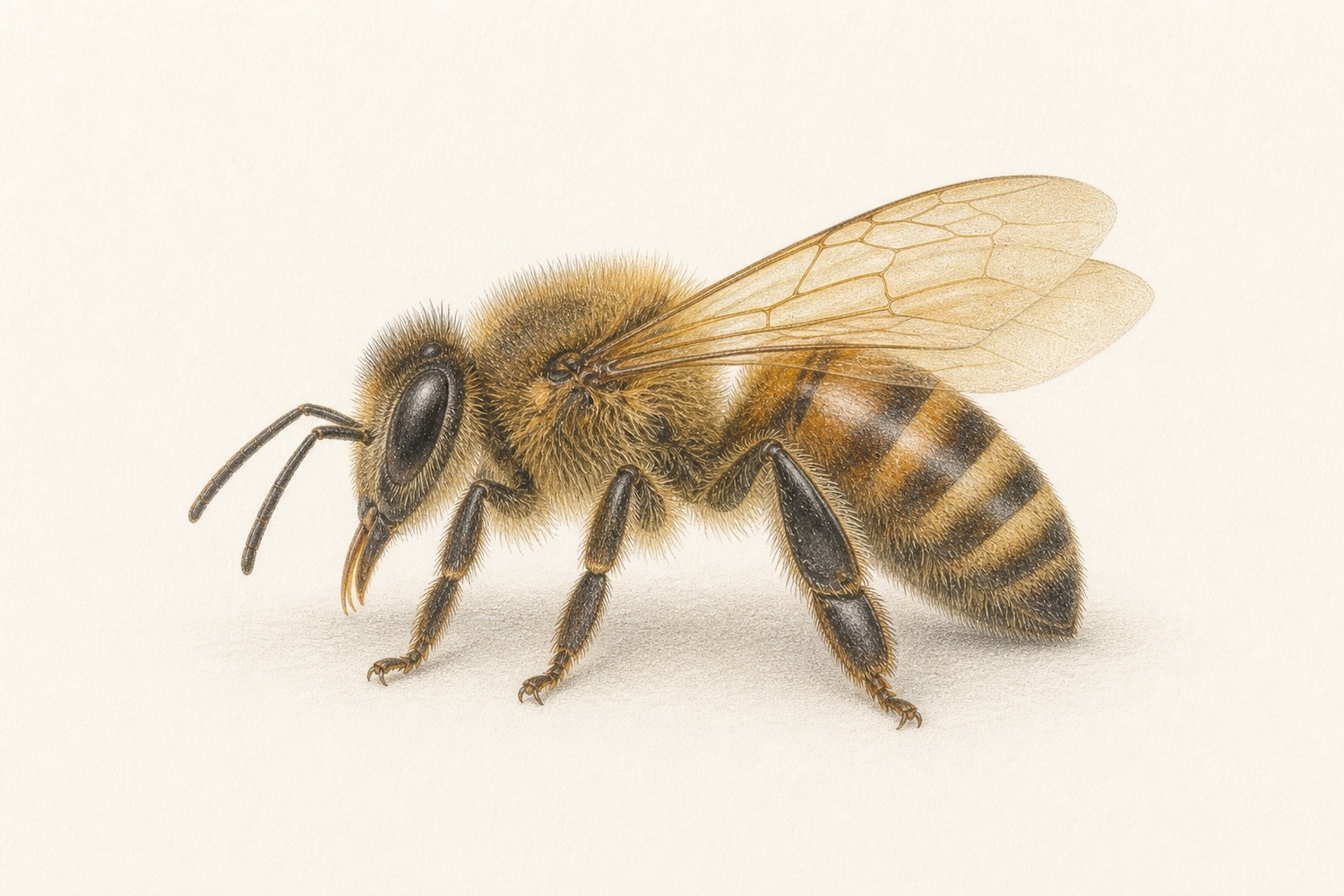
Few bees have as bad a reputation as the Africanized bee. Sensationalist media made it into a "killer bee" and added a picture of a swarm chasing everything alive. The reality is different. The Africanized bee is completely common in Brazil and much of Latin America, and Brazil today is one of the largest honey producers in the world.
Let's look at it soberly: where it came from, how it differs, and how it can be safely and productively kept.
Where Africanized bees came from
It all started with one scientific experiment. In 1956, Brazilian geneticist Warwick Kerr brought 47 queens of the subspecies Apis mellifera scutellata to Brazil. The goal of the breeding program was to combine their adaptation to tropical climates and productivity with the milder defensive behavior of European lines.
But in October 1957, the plan went awry. A visitor at the site near Rio Claro removed the queen excluders and about 26 swarms with queens escaped into the surroundings. Their offspring crossed with local European lines, and the resulting Africanized bees spread throughout much of the Americas. By fall 1990, they had reached southern Texas.
How they differ from European bees
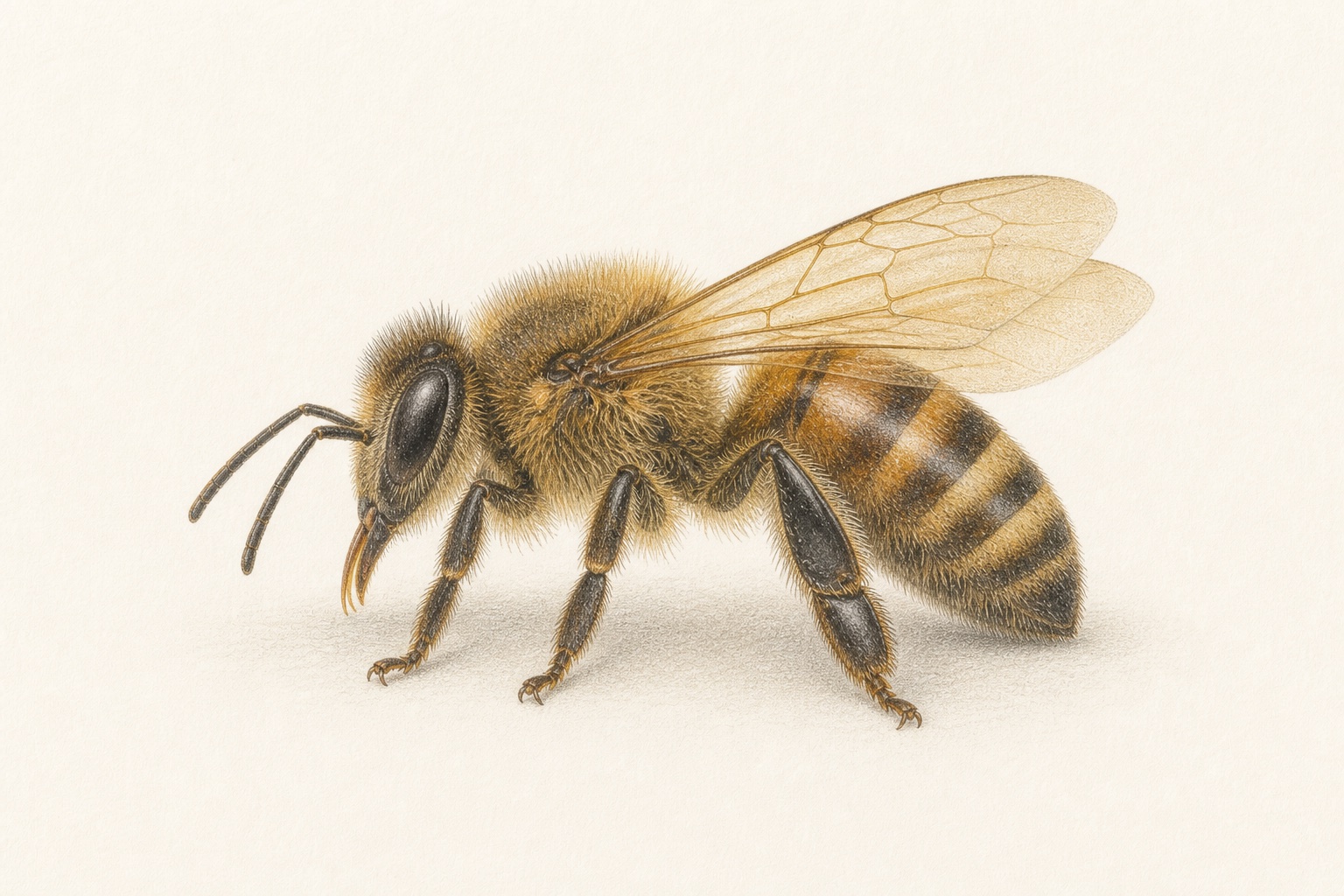 Africanized bee
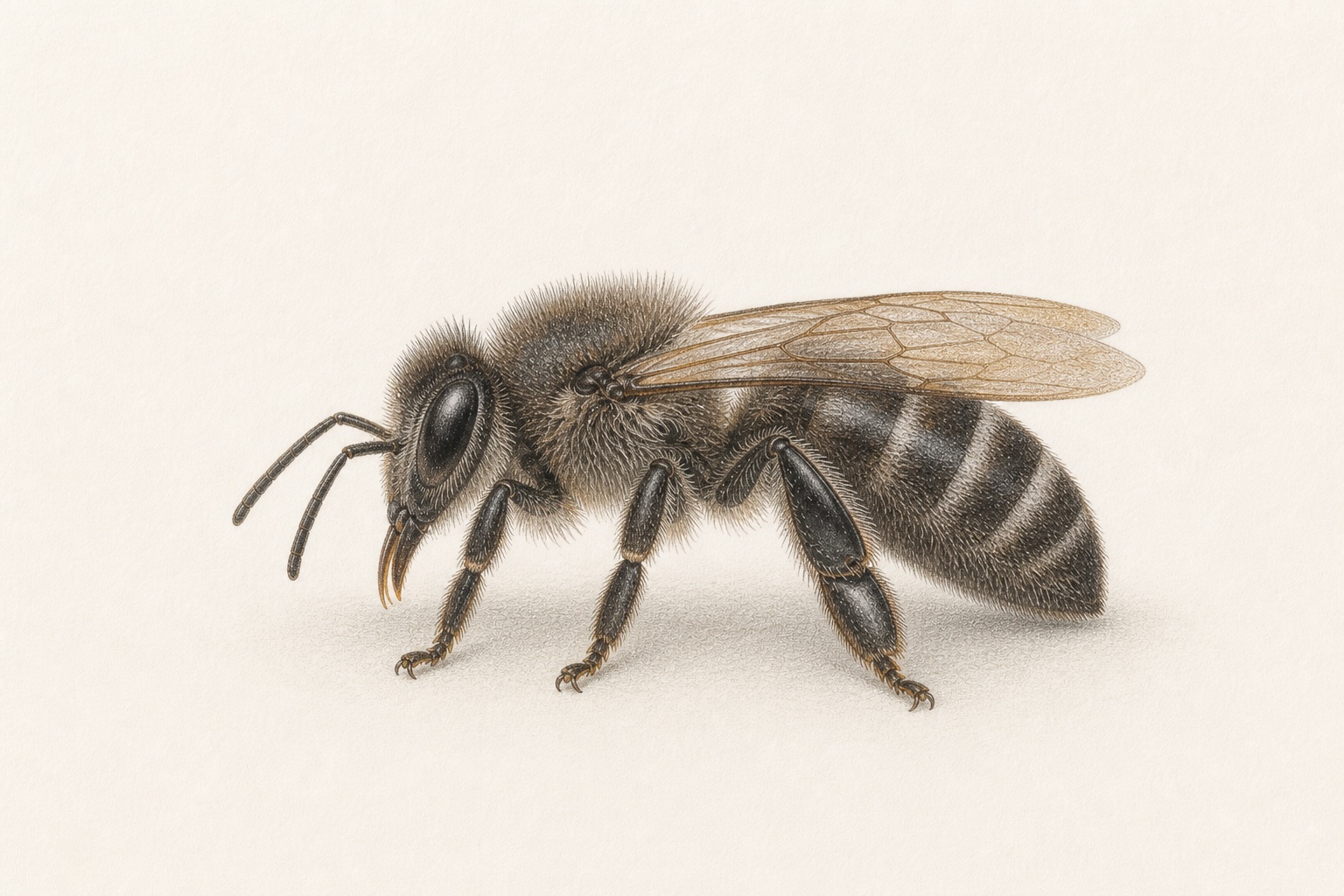 Carnica (our)
Africanized bees do not differ from European lines by having stronger venom, but primarily by their defensive behavior and some biological traits. In practice, they manifest mainly as follows:
They defend themselves faster and in larger numbers. They respond earlier to stimuli, more bees fly out, and they chase the intruder farther from the hive. It is precisely this collective defense, not the strength of an individual sting, that is the reason why careful handling is necessary.
They are adapted to the tropics. In tropical conditions, their colonies develop quickly and handle heat well. They swarm more frequently and abandon the hive more often when resources are scarce or disturbed.
They are more resilient. In many areas, they show higher resistance to some diseases and parasites, although not to all health problems.
The "killer bee" myth
The label "killer bee" was spread by sensationalist media. It does not describe the strength of an individual sting nor the usual behavior of the bees outside nest defense. The venom of an Africanized bee is not stronger than that of any other honey bee. The danger lies in the numbers: when the whole colony defends itself at once, a person or animal receives many more stings than when encountering a calmer colony.
But this should not be taken lightly. Every sting can cause pain and a local reaction, and in allergic people even a single sting can trigger life-threatening anaphylaxis. A large number of stings can have severe toxic effects even in non-allergic persons. Therefore, the key is not fear, but correct technique and keeping your distance.
How to safely and productively keep them
Brazilian beekeepers have been keeping Africanized bees in regular operations for decades and have refined several principles:
Location of the apiary. Hives should be placed at a safe distance from dwellings, roads, and livestock, ideally behind a green barrier that raises the bees’ flight path above people’s heads. Follow local regulations; the Brazilian federal manual recommends at least 500 meters. Always full protective gear. An intact light veil, gloves, well-sealed clothing, and boots are standard, not overcautious. Calmness, smoke, and never alone. Inspections should be done in clear, stable weather, with enough cool smoke, carefully, and preferably not alone.
An important long-term tool is selective breeding. Choose colonies for breeding that repeatedly react mildly, and replace queens in colonies with excessive defensive behavior with queens from selected calmer Africanized lines. This way the temperament of the stock can be moved gradually in the right direction.
How Beentry helps
Whether you keep Africanized or European bees, you need oversight. In Beentry, you record the condition of each colony, its defensive behavior, queen replacements, and treatments. The history of records makes it easier to compare colonies and select those for future breeding. Everything in one place, on mobile and web.
Keep your colonies under control
Try Beentry for free in the mobile and web app. Colony status, behavior, and queen replacements all in one place.
App Store · Google Play · Try for free
Sources and links
- Embrapa, Aspectos históricos da abelha africanizada e seus impactos na apicultura brasileira. infoteca.cnptia.embrapa.br
- UF/IFAS, Differences Between European and African Honey Bees. ask.ifas.ufl.edu
- Ministério da Agricultura (Brazil), Manual de doenças das abelhas. wikisda.agricultura.gov.br
- Texas Apiary Inspection Service, Africanized Bees. txbeeinspection.tamu.edu